The windfall question
A bonus lands, an FD matures, or a bit of extra cash builds up in your account, and the question comes up: should some of it go toward paying down a loan faster? Most people jump straight to "how much should I prepay," but there is a second question that matters just as much and gets skipped almost every time: when in the loan's life does that prepayment happen.
The amount and the timing work together to decide how much interest you actually save. Get the amount right but the timing wrong, and you can leave a surprising amount of savings on the table.
Why timing changes everything
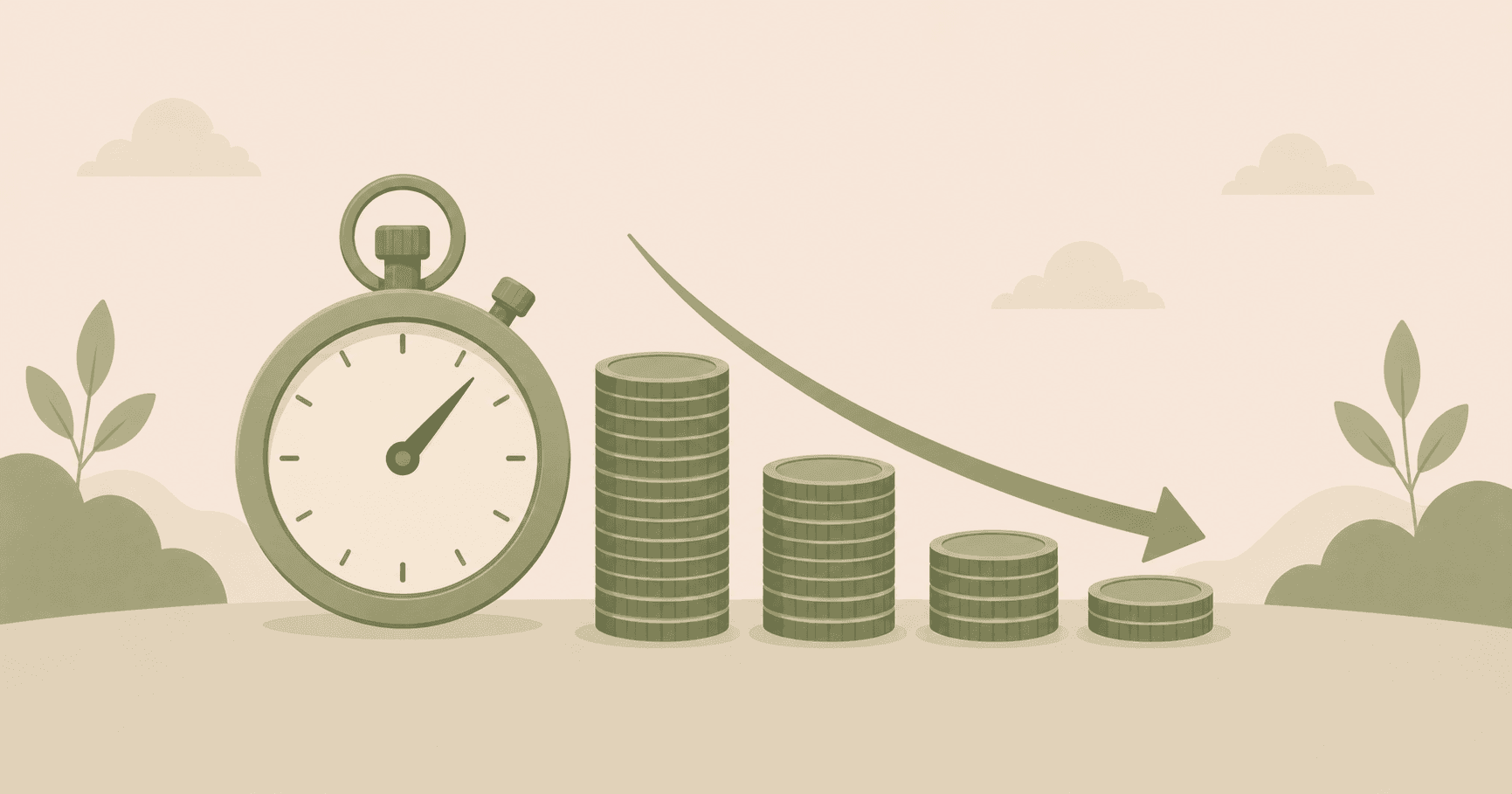
A loan's interest is charged every month on whatever balance is still outstanding. Early in a loan, that balance is large, so a rupee of prepayment removes a rupee that would otherwise have been accruing interest for a very long time — potentially close to the full remaining tenure. Late in a loan, the outstanding balance is already small and there are few months of interest left to save, so the same rupee of prepayment has much less left to work on.
This means an identical lump sum, applied at two different points in the same loan, can produce noticeably different savings. It is not a small rounding difference — for a long-tenure loan, prepaying a few years earlier rather than later can meaningfully change how much interest disappears.
A simple example
Take a ₹10 lakh loan at 10% annual interest over 15 years, with no other extra payments. Prepay ₹2 lakh right at the start, and the loan finishes years earlier with a large chunk of interest avoided. Prepay that exact same ₹2 lakh five years in instead, once a good part of the balance is already paid down, and the loan still finishes earlier than doing nothing — but the interest saved is smaller, because there are fewer remaining months for that ₹2 lakh to have mattered.
Neither outcome is bad — prepaying later still helps. The point is that "prepay ₹2 lakh" is an incomplete plan. "Prepay ₹2 lakh in month 6" and "prepay ₹2 lakh in month 60" are two different financial decisions with two different payoffs, even though the rupee amount is identical.
So should you always prepay immediately?
Not necessarily — timing cuts both ways. If you are holding cash for an emergency fund, a short-term goal, or you could earn a return elsewhere that beats your loan's interest rate after tax, it can make sense to hold off, even though waiting technically reduces the interest you will eventually save. The math tells you what prepaying earlier is worth; it does not tell you whether you can afford to make that trade right now.
A common approach is to keep an emergency cushion untouched, prepay whatever comfortable amount is left as early as realistically possible, and treat any future windfalls the same way rather than letting extra cash sit idle in a low-interest account for months before deciding what to do with it.
What this means in practice
If a prepayment is coming regardless, sooner is close to always better, all else being equal — every month it waits is a month of interest-saving potential that will not come back. If a prepayment is uncertain or competing with another use for the cash, it is worth explicitly comparing "prepay now" against "prepay in N months" rather than assuming the decision is only about the amount.
It also means refinancing conversations, tenure-shortening decisions, and prepayment planning are all more time-sensitive than they first appear. A plan that looks fine on paper today can look meaningfully worse if it quietly slips by a couple of years.
See it on your own loan
finkit's Loan Prepayment calculator lets you set a one-time lump sum and choose exactly how many months into the loan it happens, so you can compare paying it now against paying it later on your own numbers instead of a generic example. The Home Loan calculator supports the same option for a full home loan, including your down payment. Everything runs locally in your browser, so your loan details never leave your device.

No-Cost EMI Isn't Free: What You're Actually Giving Up
The interest is hidden, not gone. Here is where "no-cost EMI" quietly costs you money, and how to check if a specific offer is worth it.
5 min read
The Flat Rate Trap: Why "10% Flat" Can Mean 18%+ in Reality
Car dealers and personal loan agents love quoting flat rates because the number sounds small. Here is the real interest rate hiding behind it.
5 min read
Lean, Coast, or Regular FIRE: Which One Actually Fits You?
FIRE is not one number or one strategy. Here is how the three common variants differ, and which finkit calculator matches each one.
5 min read